


Last year, a new festival held their first event in the Bay Area in California. Doll Fest describes itself as “a celebration of the feminine energy, friendship, and community gathering together in support of one another.” This year, Doll Fest is back! Volume II will be held in Oakland, CA on March 28th and 29th with a pre-party on the 27th. And the lineup this year is just as jaw dropping and inspiring as the last.
We wanted to get in on the action, so we’ve asked the amazing bands a handful of questions about the festival including who they’re stoked to be playing with and what they think a festival of this caliber means to our scene.
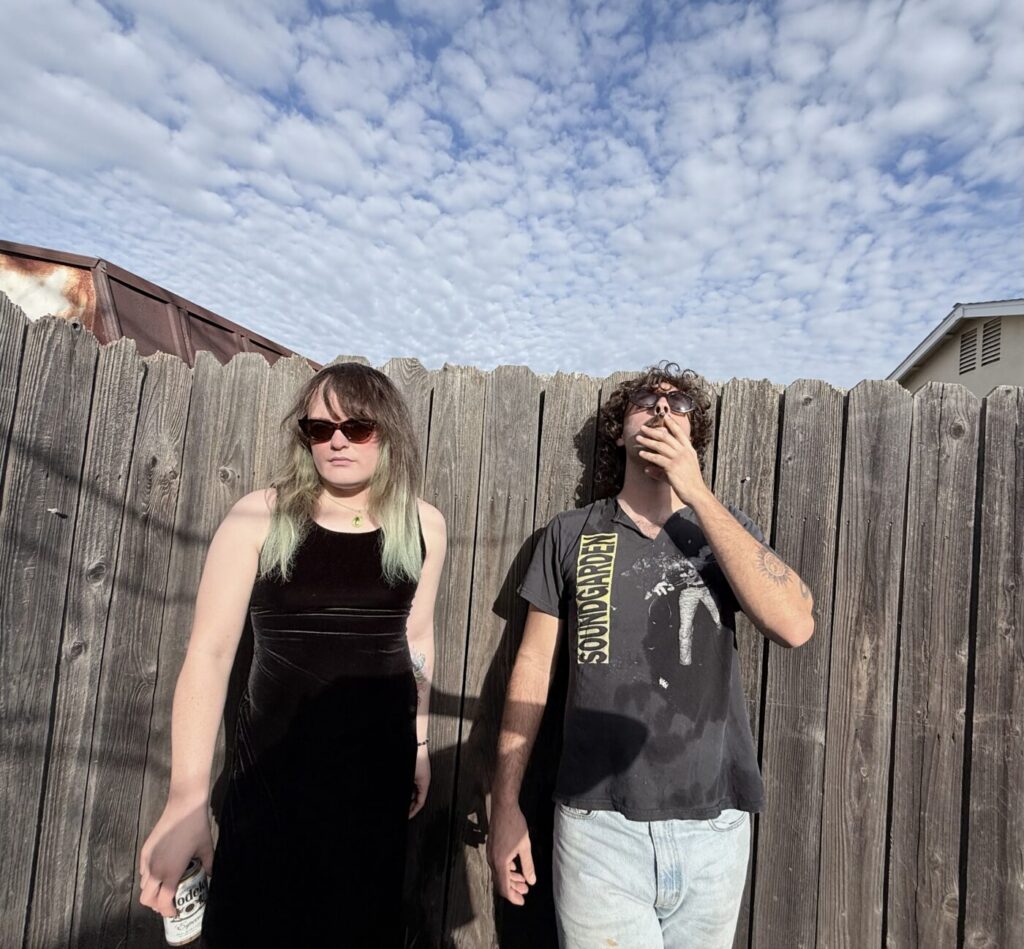
We spoke with Jackie Westcott, one half of Ick. Jackie discusses how art and music can go beyond gender, how the darkness of disempowerment can lead to dark empowerment, and how music meant for everyone that gets it. Check out the interview below and grab your tickets to Doll Fest today!
Interview

What does playing a femme-only festival like Doll Fest mean to you personally?
It’s exciting. In Ick, we generally seek out and end up playing with a lot of bands with women in them, and there’s so many incredible femme-fronted bands out there. Most musicians are still men nowadays, more often than not in punk, metal, and hardcore it’s just a bunch of guys singing about their struggles being guys. It can be hard to relate with if that’s not your personal experience, and most of my favorite artists speak from a place beyond gender and beyond patriarchal trappings. Having femme bands as the forefront is refreshing, and I think a lot of people of any gender can appreciate that. We’re honored to be included.
How does playing a festival like this shift the energy—on stage or in the crowd?
To be honest – we haven’t played many festivals. We’ve played shows with a lot of people though (at least for underground punk rock type stuff) and it’s fascinating to see different little sections of energy. Same as attending these well populated shows. A mosh pit or two over here, people in the back, the very front, there’s no shortage of energy bustling and pulsating throughout the space. When the entire crowd of that size is rowdy and into it too… there’s nothing like it. It has to be experienced to truly be appreciated and understood.
What would you want a younger version of yourself to feel seeing this lineup?
Courage to be myself and know that there was a place for me in the world. The inclusion of trans artists is also hugely appreciated by me; I remember a women only festival when I was younger being notorious for having a policy excluding trans women. That festival can go fuck itself for that, and it was something I otherwise would’ve been fascinated with attending. A place where not a single man hits on, does something creepy to you? Amazing. I think the high concentration of femmes at Dollfest will create an environment safe from creeps as well, which is a huge plus.
What does “taking up space” look like for you as a femme musician?
Being taken seriously and having a place to be heard and experienced as an artist and force of nature as opposed to an object. A lot of women are perceived even still in 2026 as defined by their anatomy, their visual expression. As a trans-femme I have no uterus, so to the patriarchy I’m of even less value. I’m a disposable sex object at best, that won’t even continue your lineage! How disappointing! I think my music, art and lyrics speak beyond my gender, and people of all gender identities can relate with it, and I know that I have a special place in my heart for those that are similar to me and feel the way I do. It’s the difference between life and death, to me and to all fans of the type of art and music I create.
Who are some femme artists—past or present—who have inspired you or paved the way?
Examples I can think of off the top of my head: Yako from Melt Banana, Lydia Lunch, Chloe Lum from AIDS Wolf, Jess Goddard from Fat Worm of Error, Jayne County, Junko from Hijokaidan, Yoshimi O from Boredoms, Poly Styrene from X Ray Spex, Yayoi Kusuma, Marina Abrovamić, Leonora Carrington. All of these women inspired me immensely early on! It’s a shame I didn’t know of more trans women as artists when I was younger, I think it would’ve been good for me.
How does your identity influence your music, performance style, or the stories you tell?
This is interesting question because, my identity and who I am of course can’t help but influence my music, but when I am in the midst of performing… I don’t necessarily feel of any gender. I am a raw amalgamation of feelings and my experiences, I’m possessed by the music, more of a spirit acting through flesh than a gendered being, although in day to day life I’ve accepted I feel fully female.
I’m trying to tell my story in a way that makes sense to me and others day by day, but it’s unraveling slowly and through layers of abstracted language. I think you have to listen to truly understand. I’m working on some songs that are more literal with my experiences, one referencing a trans woman that murdered someone harassing her. Which, isn’t exactly something I’d recommend but I think it’s part of our story, and something trans people can empathize with even if it was a terrible situation overall. Some the darkness of disempowerment can lead to dark empowerment as well.
How does your lived experience show up in your lyrics or live performance?
There are moments in my lyrics that can absolutely be decoded as trans/femme experiences and it definitely informs the frustration, anger, and violent joy I experience through life – but I often think it’s almost unintentional. I’d like to believe my songs just sort of occur like, they’re being illuminated from darkness as opposed to being composed from nothingness, laced with my human experiences. I’m still trying all the time to understand myself, humanity, and reality. A lot of us, despite gender can relate with one another’s struggles. It may not be something we can totally separate ourselves from completely, but art inspires empathy and a deep connection can expose some of that understanding. If you have flesh and blood you can relate with any other with flesh and blood on some level.
Have you experienced moments where being a femme artist shaped how you were received in the music scene?
I’ll say that I’m incredibly grateful for any opportunities I’ve been given, but I don’t doubt the fact I’m a femme artist (especially a trans one) has prevented certain opportunities. Perhaps we’re better off for that. There’s something about male power in rock music over all that’s so celebrated, and I get it, I love male musicians too, but that can often eclipse the other versions of power relating to gender in music, and that’s been clear since the dawn of recorded music. Sister Rosetta Tharpe was doing powerful rock music before people even knew what rock and roll was. Lucille Bogan was singing offensive and iconoclastic songs before our grandparents were even born.
A huge chunk of the bands that have reached out and want to play with Ick, the artists that reach out to me and have real connections, are often femme artists. I appreciate that connection, and the guys too – the ones that know what’s up, know what’s up. It’s about the emotion, the songs, the riffs, the energy. This music is for everyone that gets it.
Post a comment