

Last year, a new festival held their first event in the Bay Area in California. Doll Fest describes itself as “a celebration of the feminine energy, friendship, and community gathering together in support of one another.” This year, Doll Fest is back! Volume II will be held THIS WEEKEND in Oakland, CA on March 28th and 29th with a pre-party on the 27th. And the lineup this year is just as jaw dropping and inspiring as the last.
For the last few weeks, we’ve been showcasing interviews with the bands playing Doll Fest this year. And this is it, the final interview for this year’s lineup before everything starts with the pre-party in just a few hours!
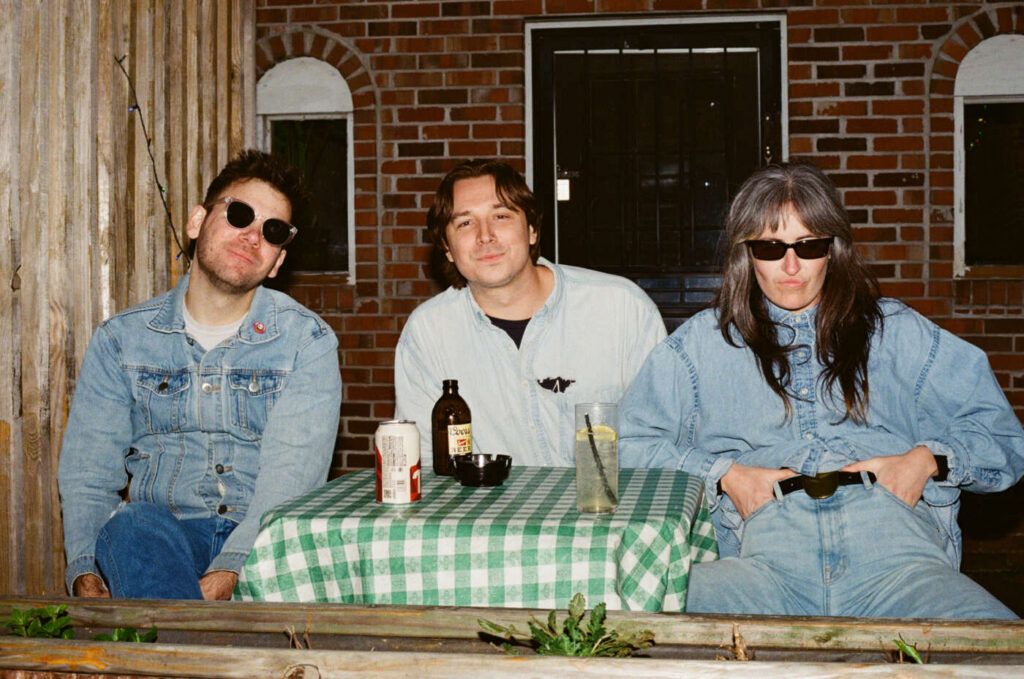
Our final interview is with Nashville’s The Dreaded Laramie, who discusses what “taking up space” really means as a femme musician and why, despite all the language of empowerment, it still so often comes with punishment, dismissal, and the expectation to make yourself smaller. In the most raw and thoughtful responses of the series, they reflect on the hidden labor, emotional cost, and quiet compromises that shape life in music spaces, offering a powerful reminder that for many femme artists, taking up space still isn’t fully allowed. Check out the interview below and grab your tickets to Doll Fest today!
Interview

What does “taking up space” look like for you as a femme musician?

It’s difficult. From the time we are young girls, we are socialized to see “taking up space” as an ultimate vice. Feminine virtue is supposed to mean making room for others: a spouse, children, authority figures; one’s closest intimates as well as strangers. This bizarre, oppressive feminine ideal has existed at least as long as the ancient Greek tradition.
In Hesiod’s Theogony (~600 BC), one of the foundational texts for Greek myth as we know it, one of the first events to take place in the whole universe is violence against Gaia (i.e., Earth, the feminine archetype) in which she is forced to make room for others both outside and within herself, causing her great pain. The Pythagoreans (a group of ancient Greek philosophers whose popularity peaked about a century after Hesiod’s time) associated fullness with the masculine and emptiness with the feminine.
Though we now understand gender differently than the ancients did, we still live in a culture that demands women and girls make room for others’ wants, the same culture that scolds women for taking up space with their own wants, dreams, boundaries, ideas, joy, and anger. Maureen Murdock writes about this socialized ideal in The Heroine’s Journey. We are told, she writes, that taking up space is not only a vice, but a burden: “the unspoken message is, ‘I won’t have to figure out what I want to do. I can live his life.’”
In my personal experience as a femme musician, it’s easiest to make room for others and not to take up space yourself. It’s possible—beneficial, even!—to do this even as one performs with machismo on stage. Because, although a band’s frontwoman might be smiling and windmilling and standing centerstage with a guitar behind her head for the 30-minute set, all of this is happening before, after, and during the set:
- she has been smiling through a man’s explanation of her own guitar, because she wants him to feel a connection over a shared interest and have a nice time at the show, and
- at the biggest show she has played in her career, she does not get the mix she prefers in her monitor because the sound Guy (who, before soundcheck, asked if she was here to do merch for the band) is either unskilled with the venue’s state-of-the-art sound system, or does not listen seriously to her requests, and
- at the smallest show she has played in her career, she ignores or laughs off incessant onstage harassment from the venue owner because her band is not well known, she wants to be asked back to the venue, and does not want to come across as a bitch to the owner or the audience, and
- at a festival, she cuts songs mid-set because the last band ended their set late and she does not want to be responsible for the next band losing time in their set or getting the festival further off-schedule, and
- she is performing songs that cause her immense pain, in which trauma is rooted, because it is the most recent music she has released, and audience members want to hear those songs live, and
- she talks to her loved ones and therapist about further and more damaging things that have happened to her as a femme musician, which she is still uncomfortable to speak about publicly.
This is unfortunate, and it’s scary even to write these words, because they may be unpopular or hard to hear, but they are true. Most of all, it is scary to say these things because this is my own voice, and not the typical public-facing facade that is voiceless, takes a step back, and makes room for others.
As a femme musician, I find the most success when I “yes-and” and use my talent to serve others rather than assert my own wants. In the relatively few times I have chosen to express my desires or set boundaries as a musician and songwriter, I have been dismissed or met with outright hostility. I am grateful that my bandmates Ben and Sean are supportive and encouraging of my voice and artistic identity, and that I find myself in a situation where I am more encouraged than ever to feel empowered to take up some space.
You cannot expect to find the same support from the industry or even the more proximate DIY punk scene. So, to answer the interview question more succinctly: as much as we like to tell one another that marginalized voices matter—and, of course, many marginalized voices suffer these problems far more acutely than I do—as a femme musician, I have found that taking up space is not yet allowed.


Post a comment